Responsiveness Is Now a Competitive Advantage in International Enrollment
For many years, international recruitment was primarily a question of reach. Institutions focused on expanding presence, building partnerships, and generating demand.
Today, demand still exists. But what happens after a student makes an inquiry has become just as important as how that inquiry was generated.
A recent study highlighted by ICEF Monitor points to what it describes as a growing “engagement gap” between international student expectations and institutional response. One in three students reported abandoning an application because of communication issues. Most expect a response within a few days. Only a third of students reported receiving one that quickly.
This is not simply a customer service issue. It reflects a structural shift in how students evaluate institutions.
Expectations Have Changed
Prospective students are no longer comparing institutions solely to one another. They compare them to the digital experiences they encounter every day.
Messaging platforms are immediate and conversational; information flows quickly, and responses feel personal.
Against that backdrop, slow or fragmented communication feels out of place. When inquiries move across multiple channels without continuity, or when students are asked to repeat information, confidence erodes. What should feel like guidance instead feels transactional.
At the same time, institutions are managing growing inquiry volumes, expanded channel expectations, and often limited staff capacity. Because of all this, the gap widens.
The Pressure on Institutional Systems
Many enrollment systems were designed for a different era—where email was central, and inquiry volumes were lower. Adding more channels does not automatically solve the problem if workflows remain disconnected.
The challenge today is less about generating interest and more about managing it effectively. Institutions need the ability to:
Automation plays a role, but not as a substitute for human interaction. Rather, it creates a structure that allows meaningful human engagement to happen at the right moment in the process.
In our work with institutions across multiple markets, we see a clear pattern: when early-stage management is structured and aligned with admissions requirements, inquiry-to-decision timelines shorten, and staff capacity stabilizes. When it is not, even strong demand can dissipate before it reaches the review stage.
Closing the Engagement Gap
Responsiveness is no longer courtesy. It is a competitive variable.
Institutions that align their communication channels, workflows, and review processes are better positioned to convert qualified demand into confirmed enrollment. They reduce friction at the top of the funnel and create space for more meaningful, one-to-one engagement at the bottom.
This is where a structured admissions conversion model becomes critical: not simply capturing inquiries, but qualifying them, supporting application completion, and delivering review-ready files that allow admissions teams to move decisively.
International enrollment remains a strong opportunity. But in a more competitive and more impatient marketplace, institutions that combine speed, clarity, and operational discipline will close the engagement gap—and convert more of the demand they are already generating.
Explore the Full Market Report
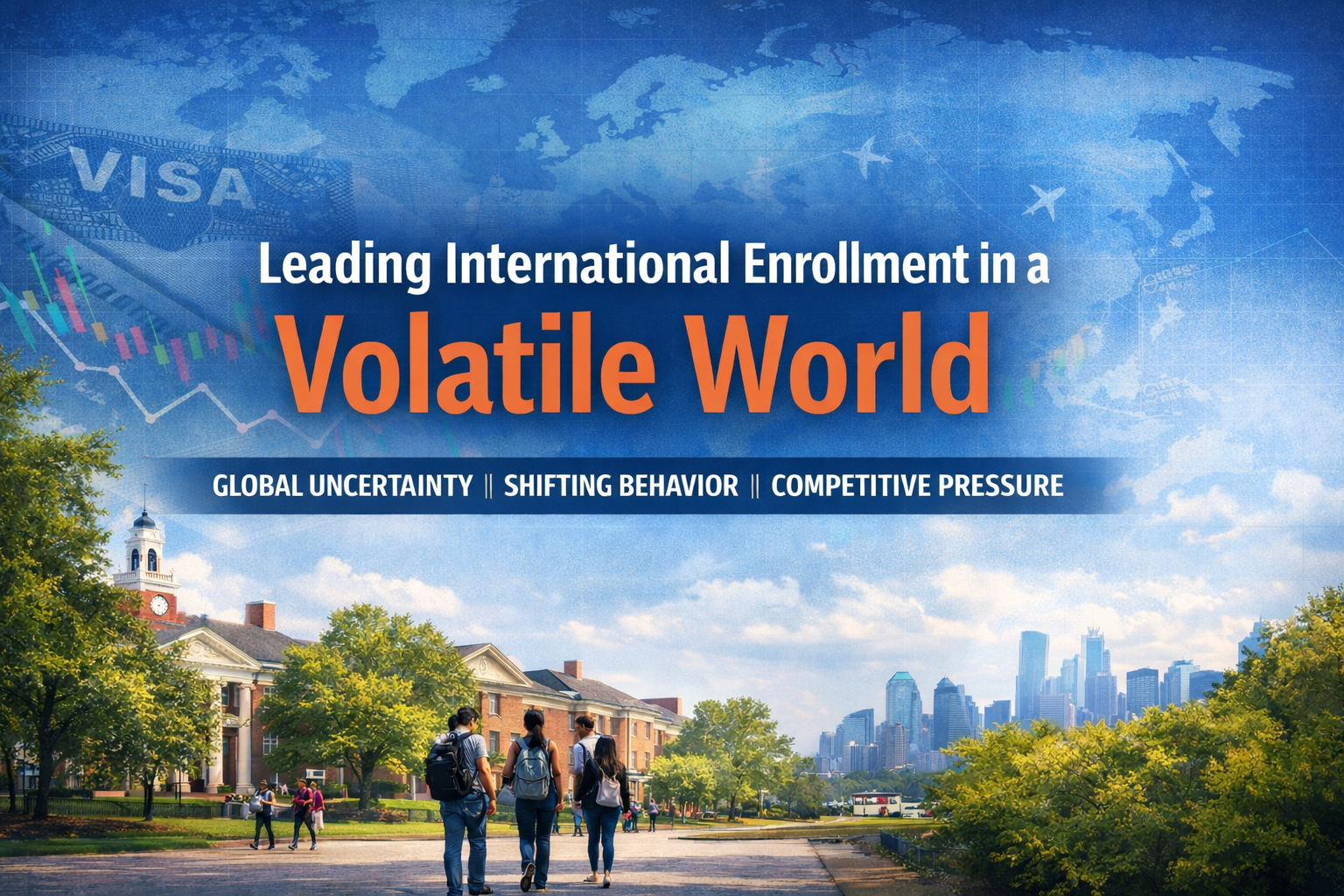
For a broader look at how global market volatility, student behavior shifts, and operational readiness are reshaping international enrollment strategy, download our latest report.
Access the Report →